Here is the correct C-123 Hotline Number:
VA C-123 Hot Line: 1 (800) 749-8387
(thanks, Trish)

[T]he government’s interest in veterans cases is not that it shall win, but rather that justice shall be done, that all veterans so entitled receive the benefits due to them.” Barrett v. Nicholson, 466 F.3d 1038, 1044 (Fed.Cir.2006)
Showing posts with label provider. Show all posts
Showing posts with label provider. Show all posts


24 June 2015
VA "Duty to Assist" – Why didn't they?
 VA didn't help, but instead insisted for years no evidence existed to support C-123 veterans' Agent Orange exposure claims. VA insisted it had "an overwhelming preponderance of evidence" (a phrase created to encompass the VA policy, rather than weight of evidence) against the veterans' claims.
VBA's duty to assist arises from a variety of sources, including the Due Process Clause in the Fifth Amendment to the US Constitution, the Veterans Claims Assistance Act, and VA's own regulation VAM21-1MR. VBA errs when it fails to consider a M21-1MR provision's possible relevance with respect to VA's compliance with the duty to assist. See 38 U.S.C. § 7104(a). But here VBA simply excused itself from compliance with all of these mandates.
Here's the statutory language requiring VA to assist veterans in presenting disability claims:
§21.1032 VA has a duty to assist claimants in obtaining evidence.VA is specifically charged by VCAA with locating records from other Federal agencies as well as state and municipal governments. But the record shows VA elected not to search for these materials when needed for C-123 veterans' claims. Even when such vital documents for proving veterans' claims were in already in VA's possession, individuals in VA disputed them, failed to provide them to veterans and their attorneys, and failed to inform senior VA leaders of their existence.
(a) VA’s duty to assist begins when VA receives a complete or substantially complete application.
(1) Except as provided in paragraph (d) of this section, upon receipt of a complete or substantially complete application for educational assistance under subpart C, D, G, H, K, L, or P of this part, VA will:
(i) Make reasonable efforts to help a claimant obtain evidence necessary to substantiate the claim; and
(ii) Give the assistance described in paragraphs (b) and (c) of this section to an individual attempting to reopen a finally decided claim.
(2) VA will not pay any fees a custodian of records may charge to provide the records VA requests. (Authority: 38 U.S.C. 5103A)
(b) Obtaining records not in the custody of a Federal department or agency.
But what's a little thing like the US Constitution to VA staffers determined to block C-123 veterans' claims? Well, it is quite a big thing, and such abuse quickly invites questions as is happening now.
What proofs did VA suppress or otherwise abuse?
1. March 2013 Joint Services Records Research Center confirmation of C-123 veterans' exposure per VAM21-1MR, with DOD specifically suggesting use of the confirmation by VA claims officials
2. CDC/Agency for Toxic Substances and Disease Registry confirmation of C-123 veterans' exposures. The deputy director (Dr. Tom Sinks,) the director (Dr. Christopher Portier,) and the interim director (Rear Admiral R. Ikeda MD USPHS) each informed VBA that CDC concluded C-123 veterans were exposed to 182-times military thresholds for dioxin exposure and suffered a 200-fold greater cancer risk. This information was disputed and not provided claimants who didn't already have it. VA also had but failed to act upon input from the National Toxicology Program, the US Public Health Service, the EPA (which concurred with the CDC finding but did not conduct its own investigation,) and multiple state agencies including medical schools, toxicology centers and even VA physician researchers.
3. May 2014 Joint Services Records Research Center began individual confirmation reports on C-123 veterans. Instead of accepting this proof and others as reaching the VA's low threshold of proof required of veterans, VA insisted it would continue with the ongoing IOM study thus delaying eventual claim approvals and blocking VA medical care for over one more year.
4. Faced with a growing body of evidence submitted by veterans, VA's Director of Compensation and Pension minimized it as "a few items" when the total was over one hundred different proofs from multiple federal agencies, state governments, scientists and physicians. VA then characterized the small body of evidence it had as "an overwhelming preponderance of evidence," principally VA staff, VA web pages, a Dow-sponsored scientist's letter, a Monsanto-sponsored scientist's letter, and own VA's $600,000 no bid sole source Agent Orange consultant who had earlier denigrated the C-123 veterans as "trash-haulers, freeloaders looking for a tax-free dollar from a sympathetic congressman," telling his VA customers to "hold the line" against C-123 veterans' claims.
5. Faced with a large body of veterans' evidence, VA responded with a contract for its consultant to prepare monographs with a principal focus of blocking C-123 exposure claims. The contractor was paid $600,000 on his no-bid sole source contract to obstruct C-123 claims. Veterans sought but were permitted no VA assistance preparing their claims. and were left to their own means.
 6. VBA characterized all non-physician scientists as unqualified to comment in support of C-123
 veterans' claims, instead citing its own VA non-physician scientists as the only proper authorities. Federal courts have ruled that toxicologists are qualified to comment on medical nexus and excluding their input is an abuse of agency discretion and unfair to claimants.
7. Faced with one veteran's numerous proofs for exposure (the local VA office termed it a "plethora of evidence" but VA minimized the dozens of documents as "a few") VBA Director of Compensation and Pension directed a denial by stating, "In conclusion there is no conclusive evidence of TCDD (the toxin in Agent Orange) causing adverse health effects." VA later termed this "an unfortunate choice of words" but allowed it to serve for denying the claim. VA thus denied the Agent Orange claim under the Agent Orange Act with its response that Agent Orange is harmless.
8. In the years C-123 veterans have sought assistance proving their claims, not a single offer of help or suggestion or assistance in any form has been permitted by VA.
9. VA withheld its internal documents in denial of Freedom of Information Act requests. Ignoring requests for years finally had VA end up in the US District Court of Washington DC, where agreement was reached to finally release most of the materials. This release was minimal before the Institute of Medicine conducted its C-123 committee work, and only began in earnest after the IOM report was concluded and the VA information of less use to the veterans. As VA is specifically charged with helping veterans locate government documents helpful to claims, this specifically abused the veterans' rights to Due Process as well as under the Veterans Claims Assistance Act.
10. Because the issue of exposure was pivotal, VA redefined "exposure" in a unique and unscientific manner differing even from other VA agencies and Federal health and science agencies, as well as in conflict with VA's standard medical dictionary. The new VA definition of exposure would exclude virtually every exposure from VA coverage, such as Ebola.
Finally, veterans should have only had to submit their claims, and not argue against the VA for these past four years. VA should have been and was charged with being the veterans' advocate, handling claims in a paternalistic and pro-veteran manner. Instead, as VA told the Associated Press, "We have to draw the line somewhere," and that "somewhere" was over the bodies of C-123 exposure victims.
Why such push-back against just 2100 men and women C-123 veterans? Because VA had an attitude of no more Agent Orange claims, plus perhaps a prejudice against Reserve Component servicemembers. Certainly, veterans blocked from VA medical care for so many years saved millions in hospital costs and other benefits, and prevented even more veterans from swamping the already-limited VA patient care capacity. VA even managed to block retroactive disability compensation by setting the effective date of its new C-123 regulation as June 19, 2015 rather than the date of claim submission as with other disability claims.
Veterans now can hope that VA will process their C-123 exposure claims sometime soon, but every C-123 veteran not otherwise eligible is still forbidden all VA medical care and other benefits until then. Not a single C-123 veteran's claim has ever been honored, even though the Institute of Medicine C-123 Committee determined in January 2015 that their claims were correct from the very beginning.
This wasn't David against Goliath: This was David against hordes of the Philistine giants! "We have to draw the line somewhere," they were shouting!
American Legion Statement on New C-123 Veterans' Agent Orange Exposure Rules
 C-123 veterans awarded benefit eligibility
Featured in Veterans Benefits Center
The American Legion Online Update e-newsletter
Special offers and updates delivered
directly to your e-mail inbox.
directly to your e-mail inbox.

After a tumultuous uphill battle, some Air Force Reserve veterans will finally be able to receive disability benefits to cover Agent Orange exposure while serving around Fairchild C-123 aircraft. VA announced the decision during a closed-door meeting with The American Legion and a handful of other veterans service organizations, effective June 19. The decision is projected to result in the awarding of over $47 million in disability benefits over the next 10 years; the decision may slightly add to VA’s backlog of disability claims.
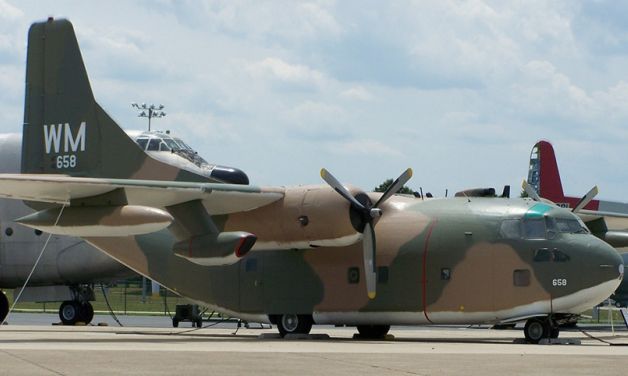
Affected individuals, not otherwise eligible for VA healthcare benefits, will also be afforded access to medical care and survivor benefits once supporting documentation is provided indicating herbicide exposure. Previously used to spray herbicides during the Vietnam War, reservists utilized the aircraft from 1969 to 1986 to transport cargo and medical supplies.
VA’s denials of claims associated with C-123 aircraft were based upon the premise that reservists were not exposed to the toxic herbicide. Nearly one month ago, VA Secretary Robert McDonald agreed to recognize the findings of a January 2015 study by the Institute of Medicine revealing that reservists were exposed to the contaminant at levels that would impact their health. After an initial indication that VA would grant the presumptive exposure, VA delayed its implementation of the policy. The failure to implement the policy garnered national attention after three senators placed a hold on the nomination of David Shulkin, M.D., for Under Secretary for Health until a formal announcement of the change in policy regarding C-123 aircraft.
“Our sense of relief is tempered by the grief felt for lost comrades,” said retired Maj. Wesley Carter, president of the C-123 Veterans Association. “It is also tempered with memories of well-funded and adversarial actions employed against our claims by the VA. Every medical and scientific fact that convinced the Institute of Medicine of our Agent Orange exposures in 2014 had been presented to the VA years earlier, but was ignored.”
Carter attributed the success of the campaign to The American Legion and other supporters who rallied behind the association. Though VA’s announcement signifies a major victory, Carter added that VA leaders need to review their actions to ensure that veterans exposed to toxins no longer “face such an unhappy struggle.”
More information can be found by visiting the VA’s website.
Veterans are also encouraged to call (800) 749-8387 for more information, or email VSCC123.VAVBASPL@va.gov.
27 April 2015
Senate AGAIN Demands VA Action For C-123 Agent Orange Veterans
Following the April 9 conference at the Senate Russell Building to address C-123 Agent Orange veterans' medical and compensation benefits, senior members of the United States Senate repeated their earlier bipartisan demand that VA Secretary McDonald exercise his existing authority and order appropriate action now.
Initially, VA expected to propose legislation using language already agreed-upon by Senate staffers. Just before the conference VA pulled the legislation which had been objected to by the C-123 Veterans Association. The vets faulted VA for having inserted language barring retroactive claims, meaning those whose illnesses manifested over the years and who submitted claims not yet approved would be denied coverage and all claims honored only from March 17 2015 forward.
Actually, the entire idea of legislation was objected to, as everyone except VA realized the Secretary had all the authority needed to act immediately. Legislation would delay yet further any relief for veterans whose illnesses had been evident for years, and has the risk of not being enacted at all.
On April 23, Senators Burr, Merkley, Blumenthal, Brown, Bennet, Warren and Wyden forwarded a joint letter to Secretary McDonald. Outlining in detail the legal basis for Secretarial action versus legislation, the letter requested firm action by the VA within fourteen days. Their letter closely paralleled the scholarly, in-depth analysis authored by Yale University School of Law, the C-123 Veterans' legal advocate.
.tiff)
Initially, VA expected to propose legislation using language already agreed-upon by Senate staffers. Just before the conference VA pulled the legislation which had been objected to by the C-123 Veterans Association. The vets faulted VA for having inserted language barring retroactive claims, meaning those whose illnesses manifested over the years and who submitted claims not yet approved would be denied coverage and all claims honored only from March 17 2015 forward.
Actually, the entire idea of legislation was objected to, as everyone except VA realized the Secretary had all the authority needed to act immediately. Legislation would delay yet further any relief for veterans whose illnesses had been evident for years, and has the risk of not being enacted at all.
On April 23, Senators Burr, Merkley, Blumenthal, Brown, Bennet, Warren and Wyden forwarded a joint letter to Secretary McDonald. Outlining in detail the legal basis for Secretarial action versus legislation, the letter requested firm action by the VA within fourteen days. Their letter closely paralleled the scholarly, in-depth analysis authored by Yale University School of Law, the C-123 Veterans' legal advocate.
22 April 2015
How Board of Veterans Appeals Sinks C-123 Exposure Claims
The impact of VHA's Post-Deployment Health Section is felt throughout VA and the veterans' community. Especially, it is felt by veterans whose appeals to the Board of Veterans Appeals are torpedoed by the unscientific policy statements fielded by Post-Deployment Health.
Below is a BVA finding which touched on a veteran's exposure claim. Look at the wording used by the BVA judges, especially "reviewed all available scientific information..."
But Post-Deployment Health didn't review all available information. Instead, they were charged with creating policy statements to block C-123 veterans' exposure claims. That meant they selected materials which opposed the basis for C-123 claims, and ignored materials which supported the claims.
If a scientific reference doesn't support the policy of preventing C-123 claims, VA doesn't mention it. Anything supporting a veteran's claim is disregarded in favor of materials selected by VA to deny claims.
 So "all available scientific information" is VA-speak for carefully selected materials to prevent claims, not actually all available information. If VA had opted to provide a more scientific basis for considering C-123 claims, they wouldn't have ignored input from the CDC/Agency for Toxic Substances and Disease Registry, the US Public Health Service, the National Institutes of Health, Oregon Health Sciences University, Columbia University and others. VA wouldn't have ignored VA researchers and physicians who affirmed C-123 exposures, or ignored juried publications including the February 2014 Environmental Research article.
The paragraph below is from a recent veteran's claim denied by the Board of Veterans Appeals, citing boilerplate language about how Public Health reviewed "all scientific information" when, in fact, Public Health disregarding all information supporting C-123 veterans' claims and cited only those materials agreeing with VA policy. Further, the quote proves the BVA itself disregards any evidence favorable to C-123 veterans.
Below is a BVA finding which touched on a veteran's exposure claim. Look at the wording used by the BVA judges, especially "reviewed all available scientific information..."
But Post-Deployment Health didn't review all available information. Instead, they were charged with creating policy statements to block C-123 veterans' exposure claims. That meant they selected materials which opposed the basis for C-123 claims, and ignored materials which supported the claims.
If a scientific reference doesn't support the policy of preventing C-123 claims, VA doesn't mention it. Anything supporting a veteran's claim is disregarded in favor of materials selected by VA to deny claims.
So "all available scientific information" is VA-speak for carefully selected materials to prevent claims, not actually all available information. If VA had opted to provide a more scientific basis for considering C-123 claims, they wouldn't have ignored input from the CDC/Agency for Toxic Substances and Disease Registry, the US Public Health Service, the National Institutes of Health, Oregon Health Sciences University, Columbia University and others. VA wouldn't have ignored VA researchers and physicians who affirmed C-123 exposures, or ignored juried publications including the February 2014 Environmental Research article.The paragraph below is from a recent veteran's claim denied by the Board of Veterans Appeals, citing boilerplate language about how Public Health reviewed "all scientific information" when, in fact, Public Health disregarding all information supporting C-123 veterans' claims and cited only those materials agreeing with VA policy. Further, the quote proves the BVA itself disregards any evidence favorable to C-123 veterans.
Furthermore, the Department of Veterans Affairs did address residual Agent Orange exposure concerns by post-Vietnam crews that later flew C-123 aircraft that had previously sprayed Agent Orange. VA's Office of Public Health is noted to have reviewed all available scientific information regarding the exposure potential to residual amounts of herbicides on the C-123 aircraft surfaces. It was concluded that the potential exposure for the post-Vietnam crews that flew or maintained the aircraft was extremely low and therefore it was concluded that the risk of long-term health effects was minimal. See http://www.publichealth.va.gov/exposures/agentorange.
30 March 2015
April begins, and still no action by VA on C-123 Agent Orange Exposures

Don't they care, or know there is a price paid by us for their inaction and attitudes? That price is in denied medical care somehow sought elsewhere, in denied state benefits for us and our families, and in denied financial compensation for our line-of-duty illnesses.
Reasons? Maybe they don't care. Maybe they're too busy. Maybe hardliners in Post Deployment Health and in the Compensation and Pension Agent Orange Dsek are pushing back, still determined to deny 100% of all claims "on a case by case basis." Maybe because every month, every day VA postpones action on these claims is money saved, appointment lists kept shorter, and claims denied and off the backlog lists.
Seems like the VA decision is already in place.
 |
| Of course, some do, but the powers that be...just don't! |
27 March 2015
Vietnam Vets of America demands Agent Orange benefits NOW for exposed C-123 Westover vets
AGENT ORANGE


The national president of the Vietnam Veterans of America is calling for bureaucrats from the U.S. Department of Veterans Affairs to be "relieved of their duties" for their continuing failure to grant benefits to veterans from Westover Air Reserve Base and three other military installations who were exposed to Agent Orange while flying planes previously used in the Vietnam War.
The Vietnam Veterans of America has been a strong supporter of the C-123 Veterans.
The two page letter expressed frustration over the fact that the veterans, who flew C-123 Provider planes after they had been used to spray Agent Orange to defoliate the Vietnamese countryside, have been fighting a four-year battle to receive medical benefits and disability payments for those who have fallen ill or become ill later.
"These VA bureaucrats attempting to delay justice ought to be relieved of their duties so they can no longer abuse veterans with their tactic of 'delay, deny until they die.' There is no excuse for why these worthy veterans are still not being treated with the appreciation and the respect their service warrants," John Warren, national president of the Vietnam Veterans of America, wrote.
He said the delay is especially vexing after an Institute of Medicine study commissioned by the Department of Veterans' Affairs determined that the about 2,100 military reservists who flew in or worked on the planes at Westover, Pittsburgh Air National Guard, Rickenbacker Air National Guard Base in Ohio and Hanscom Air Force Base in eastern Massachusetts, had been exposed to Agent Orange and are vulnerable to contracting the more than 20 diseases tied to the chemical.
The Department of Veterans Affairs is continuing to study the Institute of Medicine report, said Meagan Lutz, public affairs specialist for the Department of Veterans Affairs.
"In order to better inform and serve our veterans, the Department is examining policy and legislative issues in order to proceed with its final proposal," she said in an email. (note: different VA executives and public affairs spokespersons have offered a wide range of reasons for VA's delay; Ms. Lutz is the first to suggest the delay is to "better serve" veterans by continuing to refuse them medical care!)
Led by Retired Maj. Wesley T. Carter, now of Colorado, who served as an air medical technician and flight instructor and examiner with Westover's 74th Aeromedical Evacuation Squadron for 20 years, the C-123 group is made up mainly of Westover veterans and has been fighting for the same benefits as those who served in Vietnam. They only discovered four years ago.the planes, which they spent 10 years flying in and working on, had been contaminated with Agent Orange since Vietnam.
The federal government automatically grants anyone who served in Vietnam, even for an hour, health benefits which includes free medications, dental care and other services, and disability payments if they fall ill from any of the diseases known to be caused by Agent Orange.
Also included in the list of supporters is the National Veterans of Foreign Wars. In February six senators, Oregon Sen. Jeff Merkley and North Carolina Sen. Richard Burr, a Democrat and Republican respectively, who have been advocating for the veterans for several years, as well as Sens. Elizabeth Warren, D-Massachusetts; Ron Wyden, D-Oregon; Richard Blumenthal, D-Connecticut, and Michael Bennet, D-Colorado, also signed a strongly-worded to the Department of Veterans Affairs Secretary Robert McDonald to show their support.
"I think it is high time this battle, which has gone on for four years, is over," said Archer Battista, of Belchertown, who retired from Westover as a colonel in 2001 and is a semi-retired lawyer.
Battista, who flew planes at Westover starting in 1974, said he has been trying to help some veterans and their families who are completely overwhelmed by trying to fight the battle for medical care. As a Vietnam veteran, he is already eligible for the benefits.
"All this time the clock is ticking on some very sick people and their survivors," he said. "We know they have a decision and the decision is favorable so what is holding this up?"
It is even more frustrating since there is a second part to the battle. The C-123 Veterans are still trying to acquire squadron rosters with the names of veterans who flew on or worked on the planes at the four bases so they can contact as many veterans as possible to warn them they had been exposed to Agent Orange.
So far all requests to the Air Force have been denied.
reporter: Jeanette DeForge
24 February 2015
Little-Known Benefits From a VA Disability Rating

For 100% disabled veterans, VA's embrace is wonderful. Ophthalmology, audiology, counseling, rehab, dental, prosthetics, pharmacy, specialty clinics, general medicine...a wide range of vital services to help a disabled veteran recover, or improve as much as possible seeking the greatest quality of life possible.
And, of course, there is compensation. It is called that because of the philosophy of replacing, with some financial adjustment, the veteran's lost earning capacity. It is not a pension, it is not charity, it is not taking something more properly due another deserving veteran...it is earned by each veteran with a recognized service-connected illness or injury. There is no means test, of course: that's something required for a pension, but not service-connected compensation.
But there is more that veterans should be aware of (but I'm no expert...check with the VA for details!)
• State benefits, typically property tax relief, veterans bonuses, automobile licenses and waived auto fees, state veterans' homes, cemetaries, college tuition waiver, children's college tuition waiver
• Veterans Cemetery Administration. Burial in a national cemetery, state veterans cemetery. Burial allowances for service-connected deaths
• Priority One for VA medical care, with no co--pays
• Educational benefits for children; continued medical care for children disabled before age 18
• Transportation costs for medical care beyond a certain distance from a veteran's home
• Contract medical care in the community
• Long-term health care (this gets tricky...VA needs to explain if you're interested) in VA facilities or contracted local facilities; VA assistance with state nursing homes which charge fees
• One year of fee-waived VGLI (must be applied for)• Clothing allowance for clothing damaged by medicines, prosthetics, wheelchairs, etc.• Independent living assistance, sometimes including home modifications, quality of life issues
• Access to VA's War Injury and Illness Treatment Centers
• Combat Related Special Compensation. Adjusts taxes on military retirement, in some cases to zero, because Agent Orange is a "weapon of war"• Some commercial firms, like Lowes and Home Depot, offer discounts• Survivor's benefits, including CHAMP-VA
23 February 2015
Yale School of Law Seeks C-123 Veterans – Read Their Offer of Free Assistance

Their C-123 report on presumptive service connection is top-quality legal scholarship and persuasive to any fair-minded VA claims adjudicator. They want to help you. Free. Very good help, and very free. They want to hear from C-123 vets who did not serve in Vietnam - Vietnam vets are already qualified for benefits Yale seeks for the rest of us.
Dean Wishnie and his team also represented a Westover veteran at the Boston VA for a Decision Review Officer hearing...you can imagine the impact as the veterans' representatives were introduced to the VA folks.
Yale wants to keep helping. They are reaching out to all veterans and survivors to discuss certain legal strategies which can apply to us individually as well as our association.
Who: Primary fight crew, ACM, AGE, aerial port, AME, CAMS, life support, flight surgeons...personnel serving between 1972-1982 who had occupational duties on the C-123...that means hands-on, inside the airplane type of duty. Westover, Rickenbacker and Pittsburg units, plus Panama rotation.
The leaders of the C-123 Veterans Association ask each of you to cooperate. Doing so won't change any arrangements you may have for representation with a veterans service organization. Yale's powerful assistance to individuals and to the association is offered pro bono, of course. Other veterans legal clinics and some wonderful private law firms have also stepped up to represent our folks, all as a service in recognition of the sacrifices already made by C-123 veterans and our families.
For us lunkheads who never took Latin, that means free. I looked it up. Trust me. Jokes aside, the results these folks seek are vital and we can't get to our objective without your cooperation. Give them an email at c123.project@yale.edu.

06 February 2015
Yale University Seeks C-123 Veterans To Discuss Agent Orange Claims – Westover, Pittsburgh & Rickenbacker

Now would be good. And it won't cost anybody anything. Its what they do. Help veterans expertly and for free. Pro bono, in Latin. I've worked my bottom off for four years to get C-123 veterans in this position and now I want you to do this for yourself and for all the rest of us. Aerial Port, AME, maintainers, Life Support and aircrew...get your name and telephone in to me. So far, only 30 names have been collected.
 |
| Yale Law = C-123 Veterans' Support - pro bono! |
Any questions just contact me. Pilots LtCol John Harris and Col Arch Battista (he's also a retired attorney) and other Westover leaders have worked with these folks in the Dick Matte effort. Now we need your help on Yale's pro bono project involving all of us. Involving YOU!
Email them at daniel.townsend@clinics.yale.edu

19 January 2015
CALL FOR VOLUNTEERS TO LEAD C-123 VETERANS ASSOCIATION
 My time at the stick is over, and crew rest and financial relief desperately sought! I haven't checked but maybe there is even a FAR about too much time on veterans issues by one individual??
Who feels led to offer time and talent for the next year, with our important new objective of working with VA to implement recommendations of the IOM? The worst of the struggle is over – now we find our aircrews and maintenance personnel from all three bases and start getting the word out.
VA will help just in their administrative changes. Web pages, training letters, press releases all will orient claims official, health provider and veteran. The major veterans organizations will all be carrying the news in their magazines and web sites and we on ours. I've asked VA about reaching out through DFAS, ARPC, TREA, ROA, AFA and other authorities and associations. VA's working group, in place since IOM briefed VA on January 8, seems to be their focal point for the many decisions and we need leadership to liaise with them.
I believe we need to stay an informal, funds-free organization welcoming all with a simple request to join us. We do now need to start identifying all who'd like to be members and start a more formal collection of names, their association with the C-123 and how they can document that, illnesses, claims, denials, survivors and whatever else comes to mind in our group's new leadership.
John, Charlie, Andy, Big John, Butler, Arch, Jim, Clancey, Al and Gail, MGB...everyone. Please work this out among yourselves and find us leadership for 2015 and beyond!
Finances. We have nothing in the piggy bank, obviously. I propose we raise voluntary funds of at least $2000 per year for travel expenses, and that really covers only two trips to DC. There will be much work with legislators, VA, military associations and others which will need to keep us busy. Example: my last trip for IOM Jan 6-13 was $1250 and we shouldn't ask our leadership to get soaked for such expenses personally,
 The web sites run about $250 a year, and postage maybe $200 now that we don't need to blitz every senator with a $35 350 page 3-ring binder, or solicit interest from reports with one.
Chores, either done by the chairman or delegated to another volunteer:
1. web site and blog entries
2. correspondence with vets, legislators, military associations
3. close contact with VA to insure our needs are met with their program changes
4. PR...keep seeking interest from the press, promoted good coverage about us
5. a couple trips to DC each year; at least one guest appearance at the next annual meeting of the Vietnam Veterans of America and at the American Legion, our two key sponsoring veterans groups
6. I propose a poster display at the 2015 Society of Toxicology and the Association of Military Surgeons of the United States, telling the story of how we were screwed and how things worked out
7. work with the USAF Museum to amend Patches' history to cover our service
8. maintain contact with the Senate minority and majority leaders of the Veterans Affairs Committee
9. consider a more formal, permanent organization structure
10. STRATEGY, STRATEGY, STRATEGY for ongoing "guerrilla" advocacy of our veterans' issues, aka running an effective national campaign on less than pocket change!
Please find us a new chairman! If you want to pass the buck, nominate someone else and we'll crown him/her by popular acclaim!
01 January 2015
Air Force Association Features C-123 Agent Orange Exposure History

The Lingering Story of Agent Orange

Subscribe to:
Posts (Atom)