Nearly five years ago the US Air Force School of Aerospace Medicine (USAFSAM) at Wright-Patterson AFB released their study of the post-Vietnam C-123 transports previously used for spraying Agent Orange. The planes were used for a decade after the
Vietnam War and had never been decontaminated of the military herbicides they dispersed. The study was ordered by the Air Force when C-123 veterans complained of likely Agent Orange exposure.
The study was flawed, and tainted with command interference obvious when compared to the 38-page draft report the scientists themselves submitted. The study seemed torn between political and scientific goals, rather than science alone as would be proper. Veterans were concerned about their health but the report assured them the planes were unlikely to have been contaminated enough to cause medical issues typically associated with Agent Orange exposure.
The Air Force declined to inform aircrews of the twice-proven C-123 contamination, insisting it "would only cause undue distress and provide limited benefit." Message: we'd already been poisoned, and knowing about the poison wouldn't help us very much.
This blog began on March 14, 2011, a year before the USAFSAM report was released, and we've earned a seven-year track record of honesty and accurate interpretations of USAF and VA source data. Seven years ago, we said the Air Force and the VA were both wrong about our exposures.
By January 2015, we were proven right and they were proven wrong when the definitive Institute of Medicine report "Post-Vietnam Dioxin Exposure in Agent Orange-Contam-inated C-123 Aircraft" was submitted to the Secretary of Veterans Affairs. They were wrong, but only the veterans involved paid any penalty for errors because for six years, VA refused these vets all medical care and other benefits.
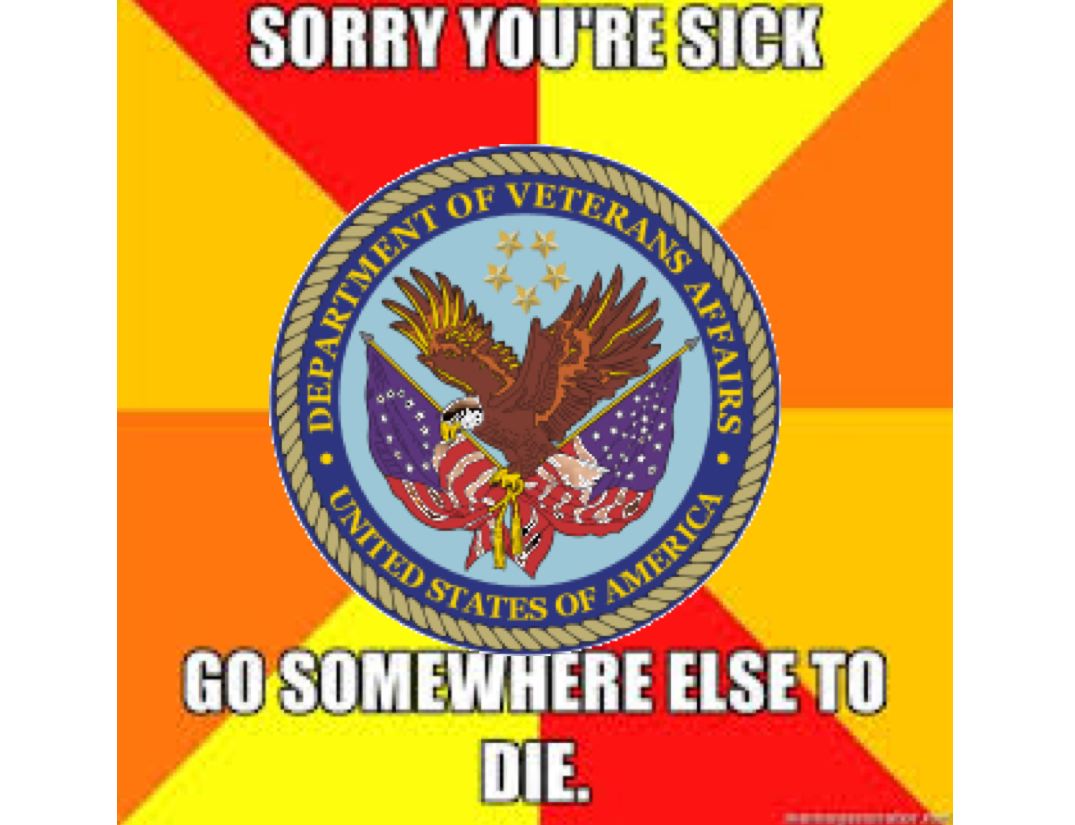
Two of those six years, 2012 to 2014, are tied to the tainted USAFSAM report and how the VA misused it. For these years VA refused all medical care, compensation, family assistance...everything needed by disabled veterans, citing the USAFSAM report as justification for VA locking its hospital doors to C-123 veterans.
Today, we begin our challenge of the USAFSAM report, together with an exposure of the damage done when VA relied on the report to cancel their own 2012 promise for referral of the C-123 question to the Institute of Medicine.
The goal now is to have the Air Force either withdraw their C-123 report ("UC-123 Agent Orange Exposure Assessment, Post-Vietnam [972-1982]) or, more probable, annotate it in some way to describe its errors and shortfalls. It should not be allowed to stand, as it has for five years, as the official Air Force conclusion about C-123 veterans and our exposures. It fouls the scientific record and offends the veterans it mistreated.
Now a clarification as we move forward. We will deal with three reports:
1. The 2012 USAFSAM C-123 Report (done)
2. The 2012 VA-promised referral to the Institute of Medicine (promised, cancelled)
3. The 2015 Institute of Medicine report, ordered by the VA (done)
Showing posts with label usaf museum. Show all posts
20 March 2015
Dayton, Ohio: Reservists Push VA For Agent Orange Benefits (Dayton Daily News)
Reservists push VA for benefits
C-123 ‘spray planes’ linked to Agent Orange-related illnesses
Robert A. Potts most remembers the smell on many of the C-123 cargo planes that had sprayed the defoliant Agent Orange over Vietnam.
The 73-year-old Moraine man never rode the planes over southeast Asia. The former Air Force reservist who was stationed at Rickenbacker Air National Guard Base near Columbus still has hand-written meticulous flight logs he said show he spent hundreds of hours flying in the former “spray birds” for eight years over the United States.
Some Air Force
Years later, working as a Russian translator at the Foreign Technology Division at Wright-Patterson Air Force Base, he said he was diagnosed with Type II diabetes, a condition he suspects was caused from his exposure to the Agent Orange residue on the planes.
“You could smell the chemical when we first got them,” he said. “That stuff, I guess, had seeped into the floor of the airplane. I had a friend of mine, he would come home (and) his flight suit smelled so bad his wife would put it in the garage,” said Potts, who flew on the planes as a loadmaster between 1972 to 1980.
“We knew when we got those airplanes, because they stank so bad, we knew they were former spray birds. But of course, we never thought of it being dangerous at the time. They were just airplanes that we flew on.”
This C-123 ‘Provi
Potts’ Agent Orange disability claim was rejected by the Department of Veterans Affairs in 2002 on grounds that he didn’t serve in Vietnam. But a report issued earlier this year gave new life to a cause championed by him and others.
The January report by the Institute of Medicine concludes that some reservists who never went to Vietnam still encountered exposures to Agent Orange-related dioxins at levels in excess of international guidelines.
Report: Health ‘adversely affected’
Robert A. Potts i
An estimated 1,500 to 2,100 reservists may have flown on the C-123 spray planes in the United States, according to the report by the institute, a branch of the National Academy of Sciences that was commissioned by the VA to report on the reservists’ Agent Orange exposure.
After they were returned from Vietnam, the C-123 “Providers,” as they were nicknamed, were assigned to cargo and aeromedical evacuation units in the Air Force Reserve at Rickenbacker, Westover Air Reserve Base in Massachusetts and the Pittsburgh IAP Reserve Station in Pennsylvania.
“The available information supports the expectation that the health of some of the personnel was adversely affected by their service in the C-123s that had earlier been used to spray herbicides in Vietnam,” the institute’s report concludes.
Robert A. Potts h
The U.S. Department of Veterans Affairs has considered former C-123 reservists’ Agent Orange residue claims on a case-by-case basis. Claimants point out that the health risks are well documented yet airmen who flew in the United States were not given the same “presumptive” exposure eligibility for VA benefits that Vietnam veterans have for serving on the ground or inland waterways during the war.
VA announcements on the issue were scheduled most recently this month, but then postponed without explanation from the VA.
But at a press conference Friday at the Dayton VA Medical Center, VA Secretary Robert McDonald said an announcement was “imminent” and “very soon” in response to a question from this newspaper.
“The issue frankly is how to execute once the announcement is made,” he said. “For whatever reasons, it’s very hard to find the people who worked on or flew those C-123s and we want to make sure when we announce we can have perfect clarity on the next steps for those veterans who served with C-123s that sprayed Agent Orange.”
The Institute of Medicine report backed up others that found long-term concerns about the approximately 30 spray planes brought back to the United States after they were flown in the defoliant program Operation Ranch Hand in Vietnam. In 2012, the Center for Disease Control and Prevention Agency for Toxic Substances and Disease Registry concluded swab samples taken on some C-123s in 1994 were 182 times higher for dioxin than guidelines set by the Army Center for Health Promotion and Preventive Medicine, according to the publication Military Times.
One clue to the level of contamination aboard the planes was culled from inside a C-123K, nicknamed Patches, on display at the National Museum of the U.S. Air Force at Wright-Patterson Air Force Base, records show. The plane was decontaminated before it was displayed inside the museum beginning in 2003.
A push for benefits
Wesley T. Carter, president of the C-123 Veterans Association, has led the push for four years to get the VA to provide benefits to C-123 reservists. The retired Air Force major and former C-123 medical services officer viewed the Institute of Medicine report as a victory for the former airmen in their battle with the VA.
“The (VA) secretary is called on by the Agent Orange Act to recognize and care for veterans exposed to
this deadly toxin,” he said in an interview. “The VA has known of this situation for many years, has had all of the scientific and medical information necessary to reach the decision they’re obliged to reach by the Agent Orange Act, but for some reason has failed us yet again.
![]() |
| “The issue is how to execute..."” |
“How many years must men and women who are already ill wait?”
Under the Agent Orange Act of 1991, veterans who served anywhere in Vietnam were presumed to have exposure to herbicides. Under VA guidelines, they may qualify for disability compensation for diseases related to Agent Orange, such as diabetes, heart disease, Parkinson’s disease and prostate and respiratory cancers, among other ailments.
Carter, 68, was initially encouraged by the announcement the VA would address the issue, but has been disappointed with the federal agency’s repeated postponements.
“It’s a very confusing situation with mixed signals,” he said. “As it stands right now, those veterans are still outside the VA hospital with their fingers on the doorbell and the door’s still locked. A delay of weeks and months is still unacceptable and painful.”
The former reservist who flew aboard the planes at Westover Air Reserve Base said he filed an Agent Orange-related claim with the VA in 2011, and was denied. He has appealed.
Carter receives full VA disability benefits because he suffered spinal injuries in the first Gulf War when he fell off a truck on a flight line. He said he filed the Agent Orange claim to determine what was happening to his fellow airmen.
“We’ve identified a number of deaths from folks who put in claims and were denied,” said Carter, who lives in Fort Collins, Colo.
Carter, who has cancer and heart disease, can’t say for sure his exposure to Agent Orange residue on the planes caused his medical problems, but he noted the increased risk of health ailments caused from exposure.
The VA has not tracked how many former C-123 reservists have applied for disability benefits, VA spokeswoman Meagan Lutz said in an email, “but we are aware of a few claims that have been decided on a case-by-case basis.”
One former reservist, Lt. Col. Paul A. Bailey, a close friend to Carter’s, was granted VA benefits for exposure to Agent Orange residue aboard the planes in August 2013, The Washington Post has reported. Bailey died of cancer in October 2013.
Lawmakers want changes
19 February 2015
NPR Reports C-123 Exposure Story on "All Things Considered"
Dayton-based Public Radio researcher Lewis Wallace expanded his initial January 28 story about C-123 Agent Orange issues into a report carried by National Public Radio on "All Things Considered." (CLICK HERE for print version.)
Listeners heard Wallace in the Air Force Museum interview a former crewmember, as well as Mrs. Barbara Carson, widow of another C-123 vet, both from Rickenbacker Air Base in earlier years.Mrs. Carson has waited many years since first applying for survivor benefits which remain denied by the VA.
Also heard was Dr. Ralph Erickson, the VA physician chairing the committee of experts from Veterans Benefits Administration and Veterans Health Administration charged with recommending response to the January 9 Institute of Medicine report.
VA also told Wallace that any changes would take several months, but there was no suggestion of what sick C-123 veterans should do in the interim.
C-123 vets who are ill, all of whom are still refused VA care, should continue seeking medical attention elsewhere. Note there is no reimbursement for any such care. Once VA's plans to address C-123 needs are published, claims submitted will take a year or more to move through their system and veterans must anticipate providing for their own care during that period.
Survivors of C-123 veterans who die during the application process might be eligible for some residual benefits. Some C-123 veterans' claims have been denied and in appeal since 2007, and veterans and even their survivors have died in the interim...General Mike Walker is a painful example of this.
The IOM research, ordered by VA in early 2014, concluded that C-123 veterans of the 1972-1982 era, from Westover AFB MA, Pittsburgh AFS PA, and Rickenbacker ANGB OH, were exposed to Agent Orange residue in airplanes left after Vietnam. Print media also covering the issue included Scientific American, Reuters, LA Times, Washington Times, New York Times, and the AP.
That conclusion overturned VA arguments which had for years improperly blocked C-123 vets' disability claims, and clears the way for aircrews, aircraft maintenance and other veterans to seek Agent Orange benefits from the VA. Dr. Erickson's committee certainly has its hands full of a complex assignment, but we have maintained that all VA has to do is issue a training memo, rather than construct new regulations and other time-killing steps.
Present law, present regulations, present rules all fit perfectly...we now ask VA to follow its own rules in VAM21-1MR, and get our folks into the VA medical system as soon as possible, even if on an interim basis. Normally, such changes are announced in the Federal Register to allow for public comment...a process taking up to seven months.
Fortunately for C-123 veterans, VA has already made three separate Federal Register announcements assuring Congress that VA will treat veterans exposed to Agent Orange with the same presumptive service connection offered Vietnam veterans themselves. Any rule changes or Federal Register postings at this point would merely be announcements that VA will henceforth follow its own rules. Rules which they could use today and permit veterans to receive care, but for some reason additional delays are what VA does best.
Of course, there is significant savings for VA in denying medical care for these men and women for as long as possible, forcing them to seek attention through other insurance or Medicare program rather than in VA hospitals and clinics where lines are already long. While such savings aren't necessarily VA's primary objective in avoiding all C-123 veterans' care for even longer than the years already wasted, that fact works against, rather than for, C-123 veterans' health needs. If veterans pay, VA saves.
C-123 Veterans Association thanks Mr. Wallace and NPR for bringing our concerns to the American public.
Listeners heard Wallace in the Air Force Museum interview a former crewmember, as well as Mrs. Barbara Carson, widow of another C-123 vet, both from Rickenbacker Air Base in earlier years.Mrs. Carson has waited many years since first applying for survivor benefits which remain denied by the VA.
Also heard was Dr. Ralph Erickson, the VA physician chairing the committee of experts from Veterans Benefits Administration and Veterans Health Administration charged with recommending response to the January 9 Institute of Medicine report.
VA also told Wallace that any changes would take several months, but there was no suggestion of what sick C-123 veterans should do in the interim.
C-123 vets who are ill, all of whom are still refused VA care, should continue seeking medical attention elsewhere. Note there is no reimbursement for any such care. Once VA's plans to address C-123 needs are published, claims submitted will take a year or more to move through their system and veterans must anticipate providing for their own care during that period.
Survivors of C-123 veterans who die during the application process might be eligible for some residual benefits. Some C-123 veterans' claims have been denied and in appeal since 2007, and veterans and even their survivors have died in the interim...General Mike Walker is a painful example of this.
The IOM research, ordered by VA in early 2014, concluded that C-123 veterans of the 1972-1982 era, from Westover AFB MA, Pittsburgh AFS PA, and Rickenbacker ANGB OH, were exposed to Agent Orange residue in airplanes left after Vietnam. Print media also covering the issue included Scientific American, Reuters, LA Times, Washington Times, New York Times, and the AP.
That conclusion overturned VA arguments which had for years improperly blocked C-123 vets' disability claims, and clears the way for aircrews, aircraft maintenance and other veterans to seek Agent Orange benefits from the VA. Dr. Erickson's committee certainly has its hands full of a complex assignment, but we have maintained that all VA has to do is issue a training memo, rather than construct new regulations and other time-killing steps.
Present law, present regulations, present rules all fit perfectly...we now ask VA to follow its own rules in VAM21-1MR, and get our folks into the VA medical system as soon as possible, even if on an interim basis. Normally, such changes are announced in the Federal Register to allow for public comment...a process taking up to seven months.
Fortunately for C-123 veterans, VA has already made three separate Federal Register announcements assuring Congress that VA will treat veterans exposed to Agent Orange with the same presumptive service connection offered Vietnam veterans themselves. Any rule changes or Federal Register postings at this point would merely be announcements that VA will henceforth follow its own rules. Rules which they could use today and permit veterans to receive care, but for some reason additional delays are what VA does best.
Of course, there is significant savings for VA in denying medical care for these men and women for as long as possible, forcing them to seek attention through other insurance or Medicare program rather than in VA hospitals and clinics where lines are already long. While such savings aren't necessarily VA's primary objective in avoiding all C-123 veterans' care for even longer than the years already wasted, that fact works against, rather than for, C-123 veterans' health needs. If veterans pay, VA saves.
C-123 Veterans Association thanks Mr. Wallace and NPR for bringing our concerns to the American public.
28 January 2015
Ohio NPR Covers C-123 Exposure Issue
Ohio's NPR reporter, Lewis Wallace, does a complete and fair job reviewing the C-123 post-Vietnam Agent Orange exposures. He details how Patches came to be the lightening rod for veterans' attention, and the difficulties moving VA forward on acknowledging veterans' disability claims. Visit for text and audio.
15 March 2013
Its Official: AF Fails to Notify Exposed C-123 Veterans
It is official. According to a 2012 HQ USAF Washington DC memo accompanying the US Air Force School of Aerospace Medicine paper addressing C-123 contamination, Major General Travis, Deputy Surgeon General of the Air Force decided NOT to notify exposed veterans of their decade of dioxin exposure!
The reason. Of course, it is not a cover up. Heaven forbid! We were not told about our 200 times greater risk of cancer, and dioxin exposure equal to or greater than Vietnam War ground troops, because the General felt it best, as he put it, " to avoid distress." He's a general, a physician and a Command Flight Surgeon, and flight surgeons are the flyers personal physician, so I know we can trust him!
Still, I am worried beyond measure these days. Perhaps if we'd been told to take normal dioxin-exposure precautions back in '94 when the Air Force confirmed our airplanes' contamination we could have taken precautions like monitoring PSA numbers and reducing fat intake. But, thanks to the General's concern about our stress levels, we lost the chance to observe those helpful steps.
Why can't I feel grateful for my unnecessary stress being spared me? General? Doc? What's the deal?

The General's letter and the AF Consultative Letter were initially only distributed to the VA, so I guess it was written to address the VA's needs, not the veterans. Certainly, the veterans are the only ones disserved, as the VA uses the letter as part of their justification for denying C-123 veterans' claims.
The reason. Of course, it is not a cover up. Heaven forbid! We were not told about our 200 times greater risk of cancer, and dioxin exposure equal to or greater than Vietnam War ground troops, because the General felt it best, as he put it, " to avoid distress." He's a general, a physician and a Command Flight Surgeon, and flight surgeons are the flyers personal physician, so I know we can trust him!
Still, I am worried beyond measure these days. Perhaps if we'd been told to take normal dioxin-exposure precautions back in '94 when the Air Force confirmed our airplanes' contamination we could have taken precautions like monitoring PSA numbers and reducing fat intake. But, thanks to the General's concern about our stress levels, we lost the chance to observe those helpful steps.Why can't I feel grateful for my unnecessary stress being spared me? General? Doc? What's the deal?

The General's letter and the AF Consultative Letter were initially only distributed to the VA, so I guess it was written to address the VA's needs, not the veterans. Certainly, the veterans are the only ones disserved, as the VA uses the letter as part of their justification for denying C-123 veterans' claims.
20 February 2013
VA Selectively Choses Data (& ignores the rest) to Deny C-123 Vets' Expsure
Think about it. They were the Agent Orange spray airplanes during Vietnam. But not after?After Vietnam, in our "age of innocence," they were the cargo C-123s.
Beginning in 1979 with the first comprehensive toxicological tests on Patches (Tail #362), the C-123 fleet began transitioning again to "the Agent Orange airplanes" but we were assured they were quite safe. Quite safe. Except for something called "military herbicides."
Retired in 1982, the toxin evidence became perfectly clear at the USAF Museum in 1994 when Patches was carefully examined by the USAF Armstrong Labs, whose toxicologists labeled her "heavily contaminated on all test surfaces" and "a danger to public health." Because they love us and care, the USAF Office of Environmental Law felt it better to keep us from worrying about this Agent Orange exposure which we'd already underwent, so they ordered "This information should be kept in official channels only." There it quietly rested until Freedom of Information Act requests in 2011 began uncovering what shouldn't have been covered up at all...we veterans were already exposed to deadly dioxin for a full decade while flying the C-123 fleet.
Now that the word is out, the VA carefully selects which words they'll accept regarding the C-123 history, because their mission is to ignore proofs and deny benefits. Always. Whenever requested - deny. And they indeed denied. Denied - all expert opinions that we were exposed. Denied - all other federal government agencies' opinions that we were exposed. Denied - and the list of excuses goes on. In particular, the VA was very careful to ignore a legal case which grew out of the inadvertent sale of C-123s out of Davis-Monthan. The GSA sold two to Walt Disney Films, and then a GSA whistle-blower notified everyone she could mail that this shouldn't have happened, leading to a court case brought by a buyer who'd wanted five more C-123s for fire-fighting.
Sworn testimony from that court case (GSBCA14165) taken from Air Force toxicologist Dr. Ron Porter and senior leadership at Davis-Monthan, really illustrates the danger of the dioxin contamination. It really demonstrates the degree to which the VA forces blinders on itself and its rating officers to pretend that the C-123 veterans weren't exposed during the years 1972-1982.The GSA and other reports are further confirmed by the Army's TG312, which analyzed toxins within closed spaces such as offices, and by which standards the C-123 veterans were exposed to 800-times the screening values!
---summation of exposure issues revealed in GSA GSBCA Appeal 14165----
GSA testimony re: Board of Contract Appeals, GSBCA14165, ruling issued 22
Sept 2000
01/24/00 (date of hearing)
Following is the C-123 Veterans' Analysis of the Government's Testimony:
[The case involved an inadvertent sale by the government of five contaminated C-123 warplanes, an action canceled by the
government but contested in court by the buyer. The Air Force and GSA together
asserted the airplanes remained hazardous with Agent Orange contamination and
the sale was negated by the GSA hearing judge, in agreement with the
government’s position. Two contaminated aircraft had been inadvertently sold to
Walt Disney Films which brought the issue to greater visibility to the Air
Force and GSA (highly embarrassing!)]
The C-123 veterans
point out that we flew these airplanes decades before these actions. Decades
during which the dioxin described by expert witnesses as hazardous, was far
fresher and dangerous in our service. It would require an unusual thought
process to consider these warplanes hazardous and in but somehow not also
dangerous in the years 1972-1982, given the general predictability of dioxin’s
half life having reduced the toxicity in later years.
Of special note is
the sworn testimony that the airplane’s dioxin did indeed represent both a
dermal and inhalation exposure threat to unprotected personnel in 2000. We were
unprotected between 1972-1982, wearing thin NOMEX flight suits and not wearing
any respirators.
page 67 (18) the Air Force expert witness
testifies under oath in federal court proceedings that the hazards of dioxin
exposure existed for all personnel associated with the C-123, not just museum
restoration workers or demilitarization workers as suggested by the VA’s
interpretation of AF test results.
Page 83 (22) Dr.
Ron Porter, AF toxicologist from USAF Armstrong Laboratory Brooks AFB, Texas,
and one of the scientists who conducted the 1994 tests of C-123 aircraft at the
USAF Museum, confirms under oath the major part of the hazard “was physical contact with the contaminated (24) surface. He continued, “If there’s
significant dioxin there, then dioxin can volatilize into (6) the air, so it could be a respirable hazard, a (7) respiration hazard.” The VA has improperly
characterized the exposure hazard as non-existent, yet here the government
testifies that it was significant in both dermal and inhalation routes of
exposure. VA has characterized dermal exposure as “unlikely” and
inhalation exposure as impossible. VA has done so only via literature review,
not via hands-on investigation of the contaminated airplanes as has Dr. Porter.
Porter stated that he directed personnel at Wright-Patterson
be kept out of the C-123 because of dioxin, once his report was completed in
1994. We were not kept out of the airplane but instead served aboard it for a
decade. Porter (5, 107)
reminds the judge that the interior of the C-123 is not only metal (upon which
the VA asserts the dioxin had dried) but actually bare aircraft-grade aluminum,
painted and unpainted metal surfaces of various types, wood, canvas, glass,
plastic, fiberglass, paper, cardboard, rubber and a wide range of other materials, all presenting
a variety of dermal dioxin transfer characteristics. Porter formed a firm
conclusion, expressed under oath, (14) that “there was a
potential risk of exposure to chemicals in those airplanes, specifically (17) Agent Orange and/or dioxin.
The C-123 veterans cannot accept any characterization which
holds that the C-123 aircraft presented a potential risk of exposure to Agent
Orange in January 2000 without that risk being considered also present during our decade
of service between 1972 and 1982, when the dioxin was much less
degraded, and fresher following the missions in Vietnam which ended only the
year before.
02 November 2012
Senators Demand VA Briefing re: C-123 Agent Orange
![]() |
| Sen. Jeff Merkley, Oregon |
![]() |
| Sen. Richard Burr, North Carolina |
Easy. Just call your senators' and congressman's local offices, ask for the veterans affairs staffer, and pass along the invitation from Will White...tell them to contact Mr. White in DC for the meeting time and place, and you're done. Of course, you might want to follow up after the meeting to "encourage" your senator to continue pressing the VA for action! It would also be superb if you were to "educate" your senator's staff about the C-123 exposure issue, and I've prepared the C-123 Agent Orange briefing for them which you can download by clicking HERE.
The 1994 Air Force testing on Patches labeled it "heavily contaminated" on all test surfaces, and "extremely dangerous." Alarming words certainly bad enough to get our attention, and they did! And that's what the inspectors meant so the aircraft was immediately quarantined from all personnel access...not just restoration workers.We correctly understood that if Patches was extremely dangerous when the tests were done in 1994, Patches and her sister C-123s were certainly extremely dangerous when we flew them 1972-1982! And, of course, tests over the next many years continued to confirm these as "a danger to public health" until they were all destroyed in 2010 as toxic waste. So the Air Force's 2012 report was supposed to set the record straight.
Ah, but enter politics, replacing science! The Air Force's 2012 reexamination of C-123 records led them to dismiss the recommendations of the toxicologists who examined Patches, using as an excuse the pretense that the recommendations must have been meant for AF Museum restoration workers only, not to personnel in general. They listed the types of chores the museum restoration workers were likely to perform and disturb Agent Orange residue and implied those tasks were different than what we did, so we couldn't have been affected by disturbing Agent Orange residue.
And the base chief of safety even required the aircraft be opened and aired out for two full days to vent dioxin in the air before personnel entry...anybody remember us doing that at Westover? I don't!
Horse feathers! We did those restoration workers' chores and much more. We did them, not for the days or weeks a restoration effort might require, but for years upon years, and we certainly were exposed thereby to the deadly TCDD component of Agent Orange. Several of our veterans have submitted sworn statements to that fact, and we need more...especially from squadron commanders and NCOICs! Download the statement here and, if you are in agreement, sign and return to me by scanning it (if possible) or snail mail.
Subscribe to:
Posts (Atom)

.jpeg)