Showing posts with label huffington post. Show all posts

21 July 2015

VETERANS WORRY – VA FOOTDRAGING ON EXPOSURE INJURY CLAIMS


VETERANS TOXIC CHEMICALS
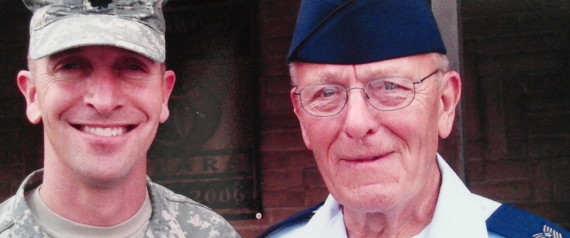
Retired USAF Master Sgt. Casimir Cerniauska on right, his son on left


Print

Retired Senior Master Sgt. Leslie Howe has battled two cancers -- non-Hodgkin lymphoma and prostate cancer, both of which have been linked with exposure to Agent Orange, the herbicide used by the U.S. military to destroy enemy cover and crops during the Vietnam War. Howe, 71, was never actually in Vietnam during the conflict, but in the 1980s he served aboard Air Force planes that contained trace amounts of the defoliant. Still, the U.S. Department of Veterans Affairs twice denied Howe's benefits claim, telling him in a letter that it "could not find a link" between his medical conditions and his military service.
"I flew in good conscience on that aircraft, not knowing the danger," said Howe, who recalled a distinct "aroma" at times while he worked in the aircraft as an air medical evacuation technician. "I did it because I wanted to serve my country."
c123 veterans
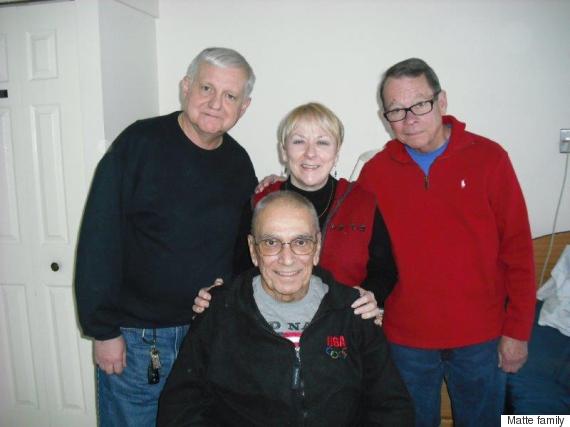
C-123 veterans reunited in early 2014: Master Sgt. Les Howe (back left), Master Sgt. Richard Matte (front center), Lt. Col. Mary Griffin-Bales (back center) and Senior Master Sgt. Steve Caraker (back right). (Matte family)
Similarly, retired Master Sgt. Casimir Cerniauskas, a World War II refugee from Lithuania, never hesitated in his decision to serve his adoptive country. He spent 37 years in the U.S. Air Force, including years loading and unloading cargo from contaminated C-123 airplanes -- the craft used to deploy Agent Orange in Vietnam -- in the U.S. after the Vietnam War had ended. Today, he's undergoing chemotherapy for myelodysplasia, a type of blood cancer, after already fighting non-Hodgkin lymphoma and being told that he couldn't qualify for the same Agent Orange-related benefits granted to veterans who served in Vietnam, where they were assumed to have encountered the herbicide.
"I don't regret serving," said Cerniauskas, whose three sons have all graduated from West Point and been deployed in Iraq and Afghanistan. "But how they make veterans wait, it makes me sick. They are dying. It's not right."
Howe and Cerniauskas both said they will be refiling their claims, now with renewed hope after what they say was a long-overdue policy change announced by the VA in June.
The limits and lags in medical care and disability benefits for veterans are well established. Look no further than a federal lawsuit filed in April by combat-injured veterans forced to wait up to two years or more for required records from the VA before they could apply for benefits. Jon Stewart, host of Comedy Central's "The Daily Show," has repeatedly called out the agency for its red tape and backlogs of claims. As The Huffington Post recently reported, nearly one-third of the 847,000 veterans with pending applications for health care through the VA have already died.
But perhaps no population of veterans are more frustrated by VA denials and delays than those who believe they were sickened by environmental exposures during their service. Many of those vets have stories and complaints similar to Cerniauskas and Howe's.
"The way the VA is doing things, and has been for quite a while, is just unfair," said Rod Longino, who served on an aircraft carrier during the Vietnam War and recalled "constant contact" with planes that had been through areas of "active defoliation" in Vietnam. Longino never entered the country himself during the conflict, but he has since been diagnosed with prostate cancer, respiratory disease and Type 2 diabetes, all conditions that have been linked with Agent Orange.
"I'm a poster child for Agent Orange," he said. The VA denied him benefits for the same reason they had the C-123 veterans: He hadn't been in the right place at the right time.
Agent Orange isn't the only concern. Thousands of former and current military personnel have encountered a number of other toxicants, from contaminated drinking water at North Carolina's Camp Lejeune to burn-pit smoke in the Middle East toplumes of radiation off the coast of Fukushima. More than 130 contaminated military sites are included on the U.S. Environmental Protection Agency's National Priorities List. Exactly how many veterans have developed exposure-related illnesses remains unclear, in part because it can take years, or even decades, for an exposure to manifest as a health problem like cancer or respiratory disease.
While the VA maintains that it does its best to be fast and fair, some advocates suggest that the roadblocks to care and compensation for those sickened by environmental toxicants go beyond simple bureaucratic inefficiency.
"The VA is following a careful script with exposures," said an aide for Sen. Richard Burr (R-N.C.), who has been an active advocate for veterans exposed to toxicants. "They are trying to hold off as much of the science as long as they can, concerned about the ramifications for their enterprise."
Chris Portier, former director of the Agency for Toxic Substances and Disease Registry at the U.S. Centers for Disease Control and Prevention, said his team determined a few years ago that the C-123 veterans could have breathed, absorbed and consumed enough residual dioxin, a component of Agent Orange, to have gotten sick. Dioxin is a known carcinogen and can disrupt the normal functioning of hormones, as well as immune, nerve and reproductive cells.
"We wrote the VA a pretty straightforward letter in 2012," said Portier. "But the VA didn't want to believe it when we said [the C-123 veterans] got these exposures." It took "congressional intervention" regarding the C-123 planes, he said, before the VA "had nowhere to go but to deal with the issue."
Bart Stichman, an attorney and joint executive director of the National Veterans Legal Services Program, told HuffPost that the delays follow a pattern at the VA, as illustrated by its actions and inactions concerning Agent Orange. Stichman's legal group represents C-123 veterans as well as so-called Blue Water Navy veterans, like Longino, who believe they were exposed to Agent Orange while serving offshore of Vietnam during the war.
"They've dragged their feet on the issue for a very long time," said Stichman. "All the way back to the late 1970s, when the issue first surfaced about Agent Orange."
Poisoned planes
During the 1970s and '80s, Howe and Cerniauskas were among a couple thousand Air Force reservists who served aboard repurposed airplanes that retained small amounts of Agent Orange after the Vietnam defoliation missions. The herbicide was ultimately revealed to cause cancer, diabetes and neuropathy, among other conditions. In 1991, decades after the health risks had become known, Congress ordered the VA to begin providing benefits to veterans who'd been exposed to the substance.
c123
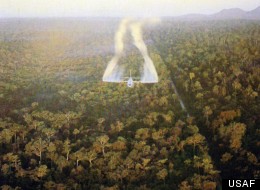
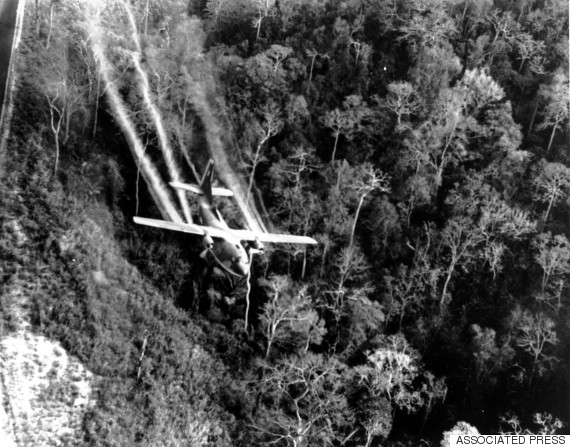
In May 1966, a U.S. Air Force C-123 flies low along a South Vietnamese highway spraying defoliants on dense jungle growth beside the road to eliminate ambush sites for the Viet Cong during the Vietnam War. (AP)
But initially, only veterans who served with "boots on the ground" during the war were eligible for those benefits -- which is why despite showing classic symptoms of Agent Orange exposure, C-123 and Blue Water veterans had generally been denied the same help.
Last month, the VA announced a new rule that at least heartened one of those groups. Cerniauskas, Howe and their fellow C-123 veterans are now eligible for the Agent Orange presumption. Fewer than 400 of them are expected to file claims, for a total VA expenditure that is estimated to eventually reach $47 million.
Still, despite this victory, many C-123 veterans remain frustrated. They lament how long it took the agency to make its determination, which came months after a Januaryfederal report concluding that lingering amounts of the herbicide on the fleet of C-123s could indeed have sickened the reservists.
"That report was based on science done years ago. There was no new research," said Retired Maj. Wes Carter, who served aboard C-123s after Vietnam. "The VA had confirmation of the exposure back in 2011. They sat on the evidence."
The VA's offering is also not quite complete, some veterans and advocates argue. The agency, mirroring some of its prior policies, decided not to provide the newly eligible vets with retroactive compensation through the new ruling, a move Carter called "arbitrary" and "unconstitutional."
Meagan Lutz, a spokeswoman with the VA, confirmed that the new help is only available beginning on June 19, when the rule was published, or from the subsequent filing date. Widows of C-123 veterans, she said, will not be eligible for the disability compensation.
Carter himself was denied Agent Orange-related benefits for his cancer, heart disease and other medical problems, but still receives full disability due to other injuries from his military service. Many of his sick comrades, however, have struggled financially, some even passing away, in the decades since their service.
Critics have accused the VA of taking much longer than needed on the C-123 eligibility extension, saying that because the agency took years to bring those veterans into its Agent Orange benefits structure -- and because it is not offering retroactive compensation -- it will end up paying out just a minimal sum, since so many eligible veterans have already died and the ones who are left are getting on in years.
"Most folks have watched a serious amount of money go out the window," said Carter, who has been leading the effort on behalf of this community of veterans.
A representative for the VA did not immediately respond to a request for comment on the matter.
A history of frustration
Retired Master Sgt. Jerry Ensminger knows well the plight of the C-123 vets. In August 2012, after years of crusading for his comrades' cause, Ensminger stood alongside President Barack Obama as he signed legislation to provide medical care for Marines and their dependents who may have been affected by water contamination at North Carolina's Camp Lejeune Marine Corps Base between the late 1950s and the 1980s. The act was named after Ensminger's daughter, Janey, who was born on the base and died of a rare form of leukemia at age 9.
camp lejeune ensminger
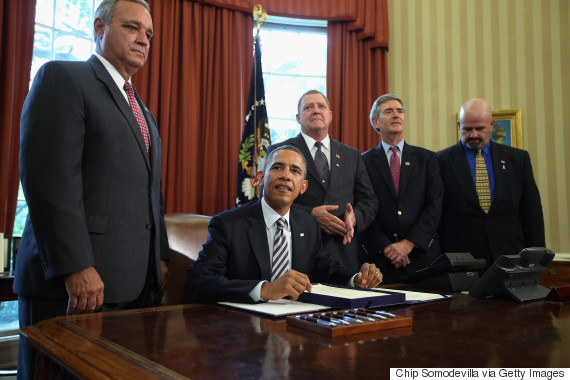
President Barack Obama signs the Janey Ensminger Act of 2012 as retired Master Sgt. Jerry Ensminger (third from left) looks on. (Chip Somodevilla/Getty Images)
In a recent interview with HuffPost, Ensminger mentioned what a long time it had taken to achieve that legislation, despite scientists linking chemicals in the camp's water, such as trichloroethylene, with cancers and other health conditions now affecting his group of veterans. He also lamented the challenges that still face veterans seeking the government's help.
Just two years after the Janey Ensminger Act was signed, a seemingly unrelated Supreme Court case threatened to undo some of that progress by adding an additional barrier to Marines seeking compensation through lawsuits. The SCOTUS ruling in favor of CTS Corp., whose former electronics plant had leached toxic chemicals into local well water in North Carolina, upheld a state statute that cuts off liability 10 years after the last contaminating act by a company -- or by the government.
In one of its amicus briefs, the Department of Justice openly stated that the CTS case had implications for "ongoing litigation against the United States" over "allegations of contaminated drinking water" at Camp Lejeune.
Some advocates argue that Obama's Camp Lejeune bill itself fell short by only providing medical care, and not compensation for injury or disability. Ensminger also pointed to what he suggests is another, more recent, VA strategy to avoid these latter payouts. The agency has lately begun consulting with a group of nearly two dozen health professionals who offer their opinions about whether a veteran should receive disability benefits. Since these professionals became part of the process, Ensminger said, the rate of claim approvals has plummeted.
"Every time Congress passes a new law that will create a whole new batch of consumers, so to speak, then the VA scurries around and creates all kinds of their own rules," said Ensminger. "They are terrified by these environmental exposures that keep popping up."
He referred to a Veterans Health Administration PowerPoint presentation that outlined the implementation of the 2012 Camp Lejeune legislation. Under the heading "Implications and Complications," a bullet read: "Does this set a precedent for other military camps, posts, & stations that are potentially contaminated?" Among the environmental issues listed was residual Agent Orange contamination at a test site in Gagetown, Canada, and on C-123 airplanes.
Dan Sullivan -- co-founder of the nonprofit Sergeant Sullivan Center, which aims to raise awareness of the struggles faced by sick soldiers returning from the Middle East -- also said he sees a general "resistance" on the VA's part to acknowledge that the conditions soldiers experience in the line of duty may be linked to the ailments they develop later. Sullivan's brother, Sgt. Thomas Sullivan, suffered from chronic widespread pain, swelling and severe inflammatory bowel issues after serving in Iraq. He succumbed to the mysterious suite of illnesses in February 2009.
Experts have begun to link some veterans' medical issues with chemicals found in theplumes of smoke that rise from burn pits. The practice of burning feces, plastic bottles and other solid waste in open pits, often with jet fuel, was especially common in the early years of the U.S. military’s presence in Iraq and Afghanistan.
"It's still difficult to get a VA recognition of disability associated with burn pits," said Sullivan. Congress has directed the VA to establish a burn pit registry to aid in identifying potential long-term health effects.
Dr. Gerald Cross, chief officer for the VA's Office of Disability and Medical Assessment, acknowledged that "environmental issues will be very important in the future." He emphasized that his agency is trying to be "very sympathetic" of the veterans, and said the experts they've hired to review Camp Lejeune cases share the same commitment.
Linda Birnbaum, director of the National Institute of Environmental Health Sciences, said that she had spoken with the VA on "more than one occasion" to discuss the science around C-123 planes, Camp Lejeune and the persistent effects of certain chemicals.
"I did not understand how they could say there was no potential for exposure on the C-123s," said Birnbaum.
She added that she was similarly mystified there was any dispute about the water contamination at Camp Lejeune.
"When you look at the compounds present in that drinking water," she said, "where's the surprise that there would be potential for adverse health effects?"
But some longtime critics are beginning to voice cautious optimism about the VA's treatment of environmentally exposed veterans. Last Thursday, the VA awarded its first C-123 disability claim processed under the new Agent Orange rule to retired Lt. Col. Edward Kosakoski, who is currently in home hospice care with prostate cancer.
"Good job, VA," wrote Carter in an email announcing Kosakoski's news to other C-123 veterans. "Keep it up!"

22 January 2014

Navy Abuses Media's Freedom of Information: Emails mistakenly sent reporter show FOIA evasion

Note: we C-123 vets have been similarly
cheated by VA and USAF on our FOIA requests. VA last month claimed it has no C-123 records...not even the "studies' VA cites as proof against our claims! The President of the United States tells us access to information is an American right...not a game for agencies to play to see how much they can keep from us!

U.S. Navy Mistakenly Emails Reporter Plans To Dodge FOIA Requests


The Huffington Post  |  By  Posted:   |  Updated: 01/22/2014 1:30 pm EST
WASHINGTON -- The U.S. Navy has apologized for mistakenly sending Washington television reporter Scott MacFarlane an internal email plotting ways to dodge the reporter’s Freedom of Information Act requests for documents related to September’sNavy Yard mass shooting.
MacFarlane, an investigative reporter for NBC 4 in Washington, in December requested memos drafted by Naval Sea Systems Command officials shortly after the Sept. 16 shooting, along with photos of Navy Yard building 197, where the gunman fatally shot 12 people.
In an email intended for internal distribution, Robin Patterson, the Navy's FOIA public liaison, outlined strategies to thwart MacFarlane’s requests, which she called "another ‘fishing expedition.’”
“Recommend that you provide the requester with an estimate, as I can see the search and review, possible redactions, will be very costly,” Patterson wrote in the Jan. 2 email. “This may encourage the requester to 'narrow the scope.' Again another 'fishing expedition' -- just because they are media doesn't mean that the memos would shed light on specific government activities.”
Patterson went through each of MacFarlane's inquiries, strategizing reasons for rejecting the investigative reporter's requests:
DON2014F-0387: this one is specific enough that we may be able to deny. However, I want to talk with the FBI, as they may have all emails during that time, in their possession.
MacFarlane posted a screenshot of the email to Twitter on Tuesday, calling the Navy's blunder an “EPIC FAILURE.”
Navy administrator Steve Muck apologized to MacFarlane in an email, according toNBC News. The Navy also apologized via Twitter on Tuesday, affirming its commitment to the FOIA and “its vital role in providing transparency to the American public.”

21 October 2013

VA Legal Office Challenged to Ethics Review

C-123 veterans have spent years seeking a sympathetic ear at the VA. By "ear," we mean someone focused on the law and veterans. For too long, individuals and sections at the Department of Veterans Affairs have predetermined C-123 veterans to be ineligible for exposure benefits. The law says otherwise!

Today, as we also did in June of this year, without response, this has been brought to the attention of VA's Assistant General Counsel. It is our hope that the most recent request won't be ignored as was the earlier. It is our hope that Attorney Hipolit has a few moments to offer our dioxin-exposed veterans the benefits prescribed by law, rather than allowing VBA and VHA to continue proscribing us from those protections.
Richard Hipolit, Assistant General Counsel
Department of Veterans Affairs
810 Vermont
Washington, DC 2042
0 
Dear Mr. Hipolit, 
This June I brought to your attention concerns The C-123 Veterans Association has regarding blanket policy-driven denials of our veterans claims for service connection, but without response from your office.  
I request that you again consider our request, as it is inappropriate for the Department of Veterans Affairs to continue refusing medical care for veterans whose Agent Orange exposure is confirmed by several federal agencies as well as numerous university medical schools and schools of public health. 
We seek a better solution than the VA denying decisions until our veterans have entered hospice care to make such deserved awards, as was the case this July of Lieutenant Colonel Paul Bailey (Huffington Post July 10 2013, Washington Post 3 August 2013, page A1 and page A14, and Washington Post page A2 and UPI, 7 August 2013,  Fox News, 11 August 2013, Stars and Stripes, 15 August 2013, many others.) 
 We believe the blanket predetermination of our ineligibility, as per the verbal assurance given me on 28 February 2013 by officials of Compensation Services that no amount of proof from any university, federal agency or military service will permit approval of our claims to be improper. And not “veteran-friendly.”  
We believe VBA’s blanket refusal to accept expert toxicologists’ input in support of veterans’ claims to be incorrect, considering decisions by both the 8th and 9th Circuit Courts. 
We believe the failure to correct numerous prejudices and improper, VA-unique VHA Post Deployment Health redefinition of the word “exposure” to reintroduce medical nexus is an issue that demands attention from your office.  
If you feel I am incorrect in these assertions, I, as chair of a national veterans organization whose argument has been vetted by both the American Legion and Vietnam Veterans of America, then ask that the issue be referred to the ethics office which overseas both VHA and VBA. believe it proper for VA to adhere to the law, even without specific court orders to do so. Somebody at VA might agree. 
 Sincerely, 
Wesley T. Carter, Major, USAF Retired, Chair 

13 July 2013

C-123 Veterans Seek VA Agent Orange Care (Huffington Post)

Veterans Sick From Agent Orange-Poisoned Planes Still Seek Justice

Posted:   |  Updated: 07/11/2013 4:13 pm EDT
agent orange
C-123s sprayed Agent Orange on Viet Cong crops and cover during the war.
After a fleet of C-123 airplanes dropped more than 10 million gallons of Agent Orange to destroy enemy cover and crops during the Vietnam War, the military found post-war work for the planes in the U.S. Air Force Reserve.
Retired Lt Col. Paul Bailey belonged to one of those reserve units. Today, he has terminal cancer and, like his sick former co-workers, he has been denied by the Department of Veterans Affairs for Agent Orange-related veterans benefits, despite expert opinions that he was likely exposed to the lingering toxic herbicide.

"Magically, once the planes left Vietnam they were no longer contaminated," said Bailey, criticizing what he sees as irrational government policy. "It's frustrating."
Between 1972 and 1982, about 1,500 men and women served aboard 34 C-123s that were previously deployed in Operation Ranch Hand, a large-scale defoliation mission in Vietnam and other countries in Southeast Asia. The planes underwent no testing or decontamination between their decade of spraying and their new state-side assignments with the Air Force Reserve, according to retired Maj. Wes Carter, who himself served aboard C-123s and has been conducting research on their toxic history. Air Force Reserve veterans also recall no warnings about contamination, or equipment to protect them from any potential aftereffects. Presumably, their superiors were themselves unaware of any danger.
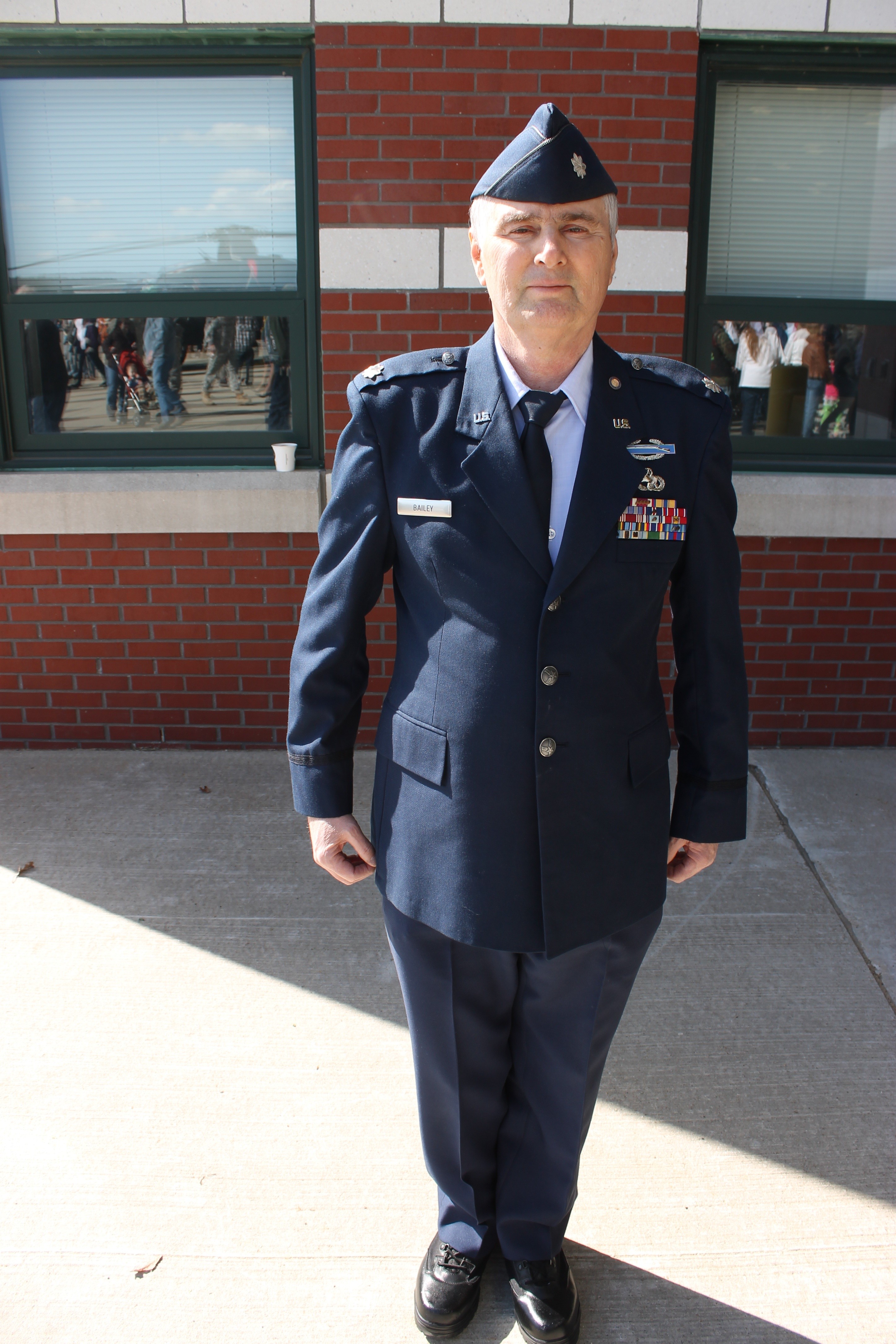
paul bailey
Retired Lt Col. Paul Bailey served on contaminated C-123s after Vietnam. He is currently battling prostate cancer. (Wes Carter)
Deemed ineligible by the Department of Veterans Affairs for benefits related to their illness, what haunts these sick veterans to this day is what they perceive as injustice. The VA maintains that carcinogenic dioxin and other components of Agent Orange could not have posed health risks after Vietnam -- only during their use in the war.
"Even though residual Agent Orange may be detected in C-123 aircraft by laboratory techniques years after Agent Orange use, any residual [dioxin] in the aircraft would have solidified and be unable to enter the human body in any significant amount," Meagan Lutz, a VA spokeswoman, told The Huffington Post.
Yet a number of leading scientists and federal officials refute the VA's claims -- calling them "ludicrous," "outrageous," even "preposterous."
Jeanne Stellman, an Agent Orange expert at Columbia University's Mailman School of Public Health, explained that dried dioxin from Agent Orange will escape back into the air and cling to dust.
"It looks like the Air Force and the VA has placed their faith in some sort of mysterious new state of matter that is neither solid, nor liquid, nor gas," Stellman said.
"That disregards everything we know about chemistry, about toxicology," Fred Berman, director of the Oregon Health and Science University's CROET Toxicology Information Center, said in response to the Air Force position. "These vets were not immune. They were exposed, yet we're denying them compensation? That doesn't seem fair."
Stellman and Berman were among 14 high-ranking doctors, toxicologists and environmental scientists who signed a letter in November 2012 criticizing the VA's policy. A few have also authored a formal scientific paper on the lingering health hazards of Agent Orange, currently under peer review.
During Operation Ranch Hand, according to Berman, the cockpit and side doors of C-123s stayed open, inviting Agent Orange spray mist back inside. Meanwhile, the pressurized tanks often spilled or leaked herbicide inside the plane, before the material even made its way outside. The result: a lot of lingering, dioxin-tainted Agent Orange that Berman suggests could have found its way into veterans' bodies.
"There is no safe level of dioxin exposure," he added, noting the chemical's connections to cancers, heart disease, diabetes and other health problems. A study published in May found contact with Agent Orange raised the risk of prostate cancer by more than 50 percent.
Former Master Sgt. John Legere, currently a safety engineer with NASA, recounted dark spots where spray tanks were kept and a "grimy, sticky Post-it note film" throughout the cabin.
"If I knew then what I know now, I would have never allowed anyone to either operate, step into or fly that aircraft," Legere said. A few years after Legere started working on C-123s in 1980 as a maintenance specialist, he began suffering fromperipheral neuropathy, a highly-painful nerve damage disorder that has been traced to Agent Orange exposure.

Bailey, who served post-Vietnam as an air medical technician and flight instructor on C-123s, recalled rain seeping through the plane's seams, engine vibrations swirling dust and ubiquitous unpleasant odors. He and his crew would often sleep, and almost always eat, onboard the aircrafts.
None of these sights and smells raised alarm for Bailey at the time. They didn't cross his mind when he received a diagnosis of advanced prostate cancer in late 2010 either. In fact, it wasn't until a few months later when he talked to his close friend -- Carter, the retired major -- that Bailey said he "really put the two and two together."
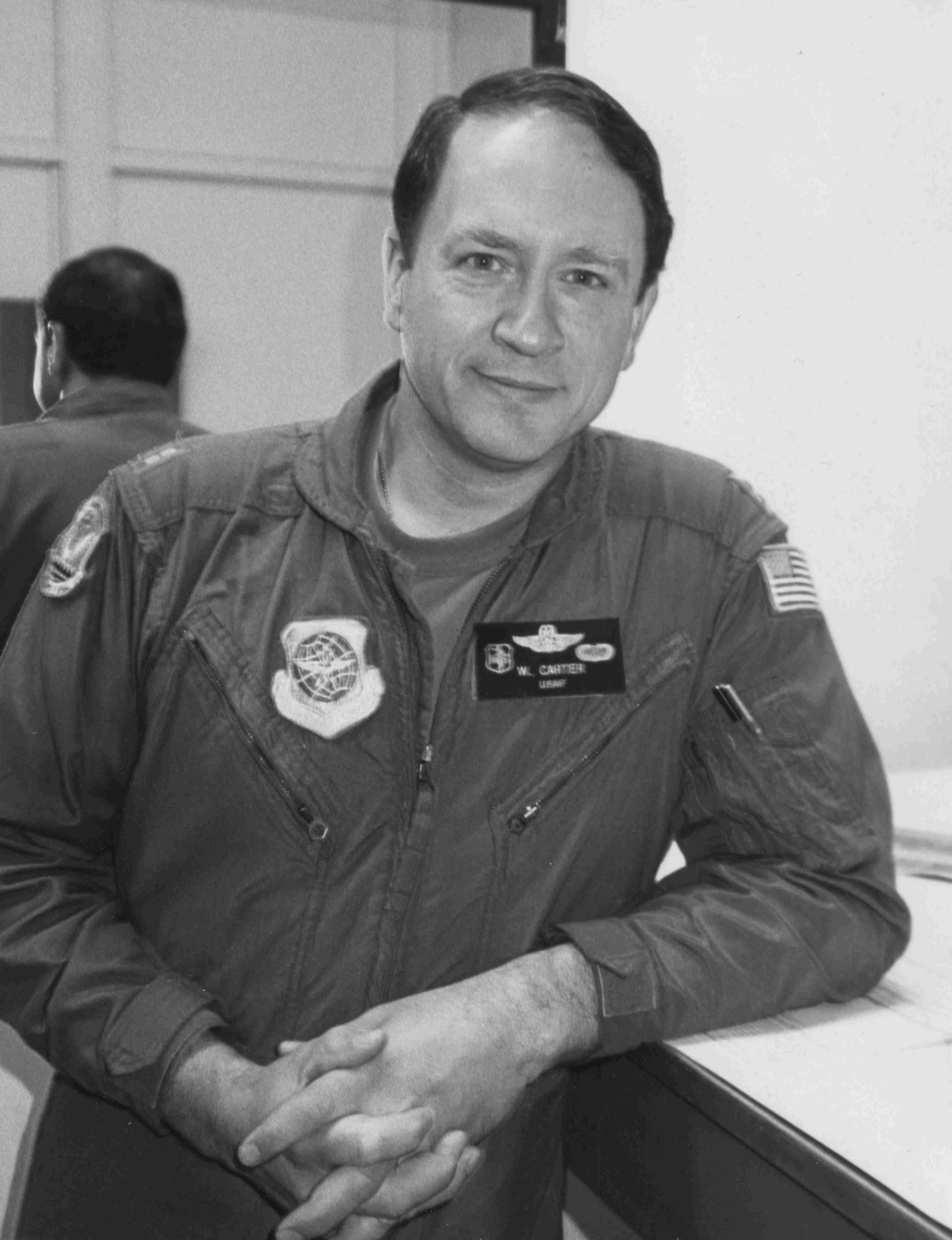
agent orange
Maj. Wes Carter served aboard C-123s after the Vietnam War. (Wes Carter)
Carter received his diagnosis of prostate cancer in March 2011. The two flew together in C-123s for more than six years. While both acknowledged the difficulty in proving the connection between any particular illness and Agent Orange exposure, they say they can't help but question the high rates of Agent Orange-related disease and deaths that they began to uncover in their group of C-123 veterans.
The VA currently assumes that veterans who spent time on the ground in Vietnam or who sprayed or handled Agent Orange herbicide during the war could have been exposed and are therefore eligible for disability compensation under the Agent Orange Act of 1991. No provisions exist for post-war exposure.
Retired Lt Col. John Harris also flew C-123s after the war. He, too, had his Agent Orange-related benefits claim denied by the VA. However, when Harris refiled with documentation of a one-hour stop in Vietnam while a fighter pilot during the war, he won coverage for his diabetes.
"I walked off the airplane and then walked back on," said Harris, noting the chances of exposure during those minutes were minuscule compared to his time aboard "noxious" C-123s years later.
Every claim filed by C-123 veterans without wartime experience has been denied, Carter said. The VA did not refute this point, but maintained that claims are evaluated on a "case-by-case basis." Yet all the C-123 veterans who have followed up with the Board of Veterans Appeals have had their denials overturned, Carter added.
"But it takes five years to get there," he said, noting that most veterans such as Bailey don't have that long. Carter himself was denied Agent Orange-related benefits for his cancer, heart disease and other medical problems, but still receives full disability due to other injuries from his military service.
"I have access to medical care," he said. "But I have friends who aren't so lucky."
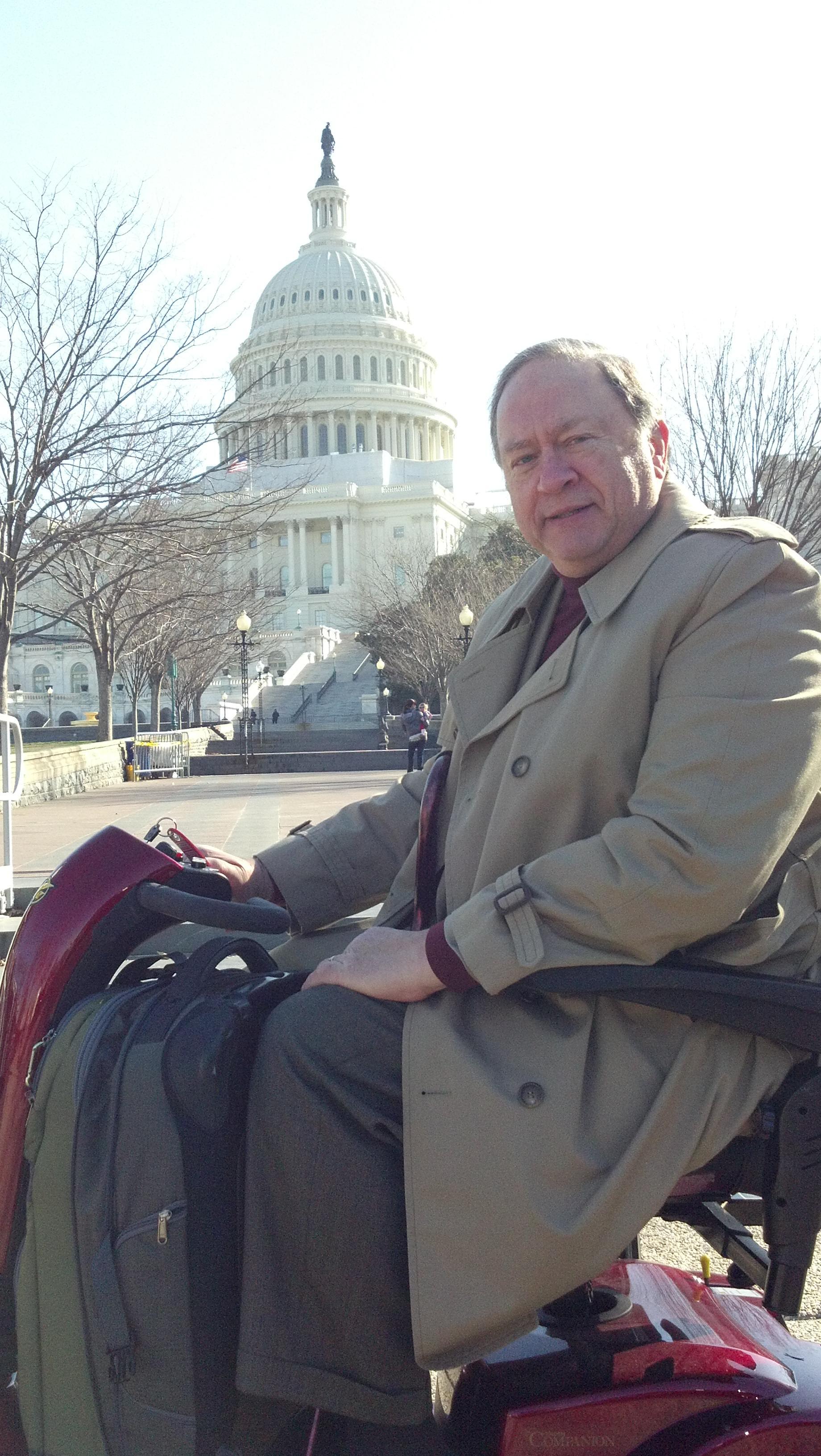
carter dc
Today, retired Maj. Wes Carter suffers from health problems associated with Agent Orange exposure. (Wes Carter)
Carter has taken on the cause full throttle, spreading the word among scientists, veterans and politicians and posting evidence publicly atc123kcancer.blogspot.com. The mounting pressure recently led to an Air Force internal assessment.
In the resulting May 2012 memorandum, the Air Force stated that any potential Agent Orange exposures on C-123s after Vietnam were "unlikely to have caused harm."
Authors on the Air Force report were not available for comment.
Some experts are critical of the Air Force's conclusion, which rested in part on one point: "existing information is inadequate to accurately determine individual exposure." Of note, the Air Force shredded and smelted the planes in 2010 -- destroying any remaining evidence.
"No proof of harm is not proof of no harm," said Richard Clapp, an environmental health expert at Boston University.
Clapp suggested that the Air Force may not have considered all the available evidence, including multiple routes of potential exposures: breathing in kicked-up dust, absorption through the skin and ingestion after food or skin contact with contaminated surfaces.
Experts also note that Air Force data on air and surface contamination -- most collected decades later -- likely underestimates the extent of contamination when veterans were onboard. Dioxin breaks down over time.
"Maybe you can't accurately determine the degree to which they were exposed, but you can extract enough information to at least point to the fact that they were exposed in a significant manner," Berman said. "I don't think the Air Force or VA can pass this off as trivial."
Levels of dioxin in some Air Force wipe samples taken in 1994 were found to be 182 times the Department of Defense's limit for office workers, Dr. Thomas Sinks, deputy director of the Centers for Disease Control and Prevention's Agency for Toxic Substances and Disease Registry, noted in an email to HuffPost.
Based on the available evidence, Sinks said that his agency has determined that aircrews operating in C-123s after the war were "exposed to dioxin."
Politicians such as Sen. Jeff Merkley (D-Ore.) and Sen. Richard Burr (R-N.C.) are adding to the pressure on the VA.
"The VA simply needs to start providing these veterans with fair, unbiased decisions based on the evidence in each case," Burr told HuffPost in an email. "I am growing frustrated with VA's intransigence on this issue."
Bailey is in Boston this week, seeking experimental treatment for cancer that has spread throughout his body. To be closer to their daughter, grandkids and medical care, Bailey and his wife are moving out of their dream retirement home in the foothills of the White Mountains of New Hampshire.
"I put my heart and soul into the military," Bailey said. "All we're really asking for is the VA do what's right."
Clarification: A previous version of this story referred to barrels of Agent Orange. The herbicide is often transported in barrels, but was deployed from tanks on board C-123s. The Bailey family plans to move out of their home in New Hampshire.

VA Secretary Receives C-123 Veterans' Appeal

Forwarded to the Secretary by the VA' Legislative Liaison, the C-123 veterans' appeal (click to download - 46MB PDF) ask the VA to designate the known C-123 Agent Orange spray aircraft (as confirmed by the USAF Historical Records Research Agency) to be "Agent Orange Exposure Sites."

If approved by the Secretary and implemented by the VA, this will allow C-123 veterans to gather whatever proof they can find placing them aboard the toxic C-123s, and apply to the VA for care of Agent Orange-presumptive illnesses such as prostate cancer and heart disease.

This would solve the terrible two year-old impasse which has bared C-123 veterans from VA medical care. Faced with mid-level VA bureaucrats who constantly fielded obstacles to keep the veterans at bay, C-123 veterans feel the Secretary's requested action is the only step available to provide essential medical care while it can still be of importance in their elderly years.

An alternate of another referral to the Institute of Medicine for a special work project (proposed in 2011 by the VA Veterans Health Administration but withdrawn almost immediately after its promise,) veterans and their legislators made clear that time no longer permits such an approach and executive action is called for!

FYI, Lynne Peeples of Huffington Post had a fine article about C-123 veterans, telling a warming story of Paul Bailey. Give it a read! Then, Sunday morning, Google "C-123 Agent Orange" and see what's new out of Washington, D.C.